GTM Endeavour vs Quickie Nitrum wheelchair
Choosing an active wheelchair is about much more than finding the lowest weight. Frame design, seating position, propulsion efficiency, adjustability and everyday transport all affect how a wheelchair performs.
The GTM Endeavour vs Quickie Nitrum wheelchair comparison is particularly useful for active users who want a lightweight rigid-frame chair. Both models focus on efficient propulsion and a personalised setup. However, their design approaches are different.
Therefore, the better wheelchair depends on whether your priority is a highly bespoke fixed setup or greater adjustment flexibility.
What Makes Them Different?
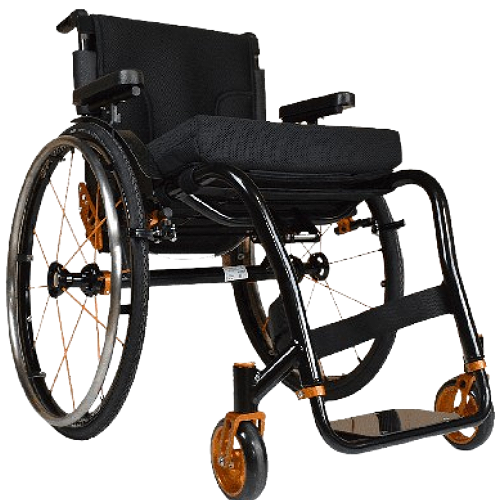
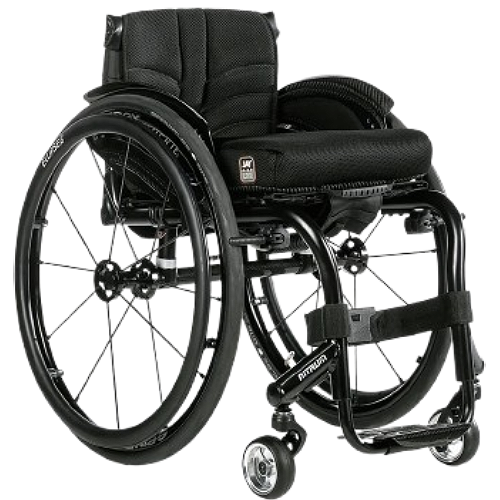
Both the GTM Endeavour and Quickie Nitrum are high-performance rigid-frame wheelchairs, but they take different design approaches to meet user needs.
GTM Endeavour
Fixed Frame, Made-to-Measure
The GTM Endeavour uses a fixed-frame, made-to-measure concept. It focuses on simplicity, strength and durability, giving users a solid and reliable ride with a clean, minimal design.
(made-to-measure)
and robust
Quickie Nitrum
Highly Adjustable Frame
The Quickie Nitrum offers a highly adjustable frame, allowing users to fine-tune key measurements like seat height, frame angle and centre of gravity. This flexibility helps achieve a more personalised and responsive setup.
options
for a tailored fit
Key Takeaway
Both wheelchairs are excellent choices for active users. If you want a highly bespoke, fixed setup with a simple and durable design, the GTM Endeavour may be the better option. If you need more adjustment flexibility to fine-tune your seating and driving position, the Quickie Nitrum offers greater flexibility.
Find the right wheelchair for your lifestyle.
The best wheelchair is the one that fits you — not just your measurements, but your goals, comfort and day-to-day needs.
and Quickie Nitrum
GTM Endeavour vs Quickie Nitrum Wheelchair: Key Differences
| Feature | GTM Endeavour | Quickie Nitrum |
|---|---|---|
|
Wheelchair type
|
Rigid active wheelchair | Rigid active wheelchair |
|
Frame material
|
Aluminium | 7020 oval aluminium |
|
Frame approach
|
Fixed, made-to-measure | Adjustable rigid frame |
|
Transport weight
|
Around 5 kg stated by UK supplier | From around 4.9 kg |
|
Maximum user weight
|
Up to 100 kg in listed specification | Up to 125 kg |
|
Seat width
|
Approximately 30–48 cm in listed specification | Approximately 32–50 cm |
|
Seat depth
|
Approximately 30–50 cm in listed specification | Approximately 34–50 cm |
|
Centre of gravity
|
Fixed on standard Endeavour specification | Adjustable 0–4 inches |
|
Frame angle
|
Bespoke configuration | 75°, 80° or 85° |
|
Backrest
|
Adjustable options | Adjustable options |
|
Main strength
|
Bespoke, lightweight fixed-frame design | Extensive adjustment and performance tuning |
|
Best suited to
|
Experienced active users wanting a personalised fixed setup | Users wanting extensive adjustability |
* Specifications can vary according to configuration and market. GTM information lists the Endeavour as a fixed open-frame wheelchair, while Quickie lists the Nitrum with multiple adjustment options.
GTM Endeavour: Lightweight and Made to Measure
The GTM Endeavour is designed around a simple idea: build the wheelchair around the individual user. It uses a rigid aluminium frame and is available as a made-to-measure active wheelchair.
One important characteristic is its fixed-frame construction. GTM describes the Endeavour as a fixed-frame wheelchair, with the camber bar welded rather than adjustable. This can create a strong and durable structure while keeping unnecessary adjustment hardware to a minimum.
The listed Endeavour specification includes seat widths from approximately 30 to 48 cm and seat depths from approximately 30 to 50 cm. A Danish assistive technology database lists a weight of 5.6 kg including wheels and leg supports for one specification, although individual builds can differ.
Why choose the GTM Endeavour?
The Endeavour makes particular sense for an experienced wheelchair user who already understands their preferred seating position.
Because the frame is built around the user’s measurements, the result can feel highly personalised.
It is also well suited to users who value a clean rigid-frame design rather than numerous adjustment mechanisms.
For active daily use, that simplicity can be an advantage.
However, the fixed nature of the frame means that careful assessment and setup are especially important before ordering.
Quickie Nitrum: Lightweight With Extensive Adjustment
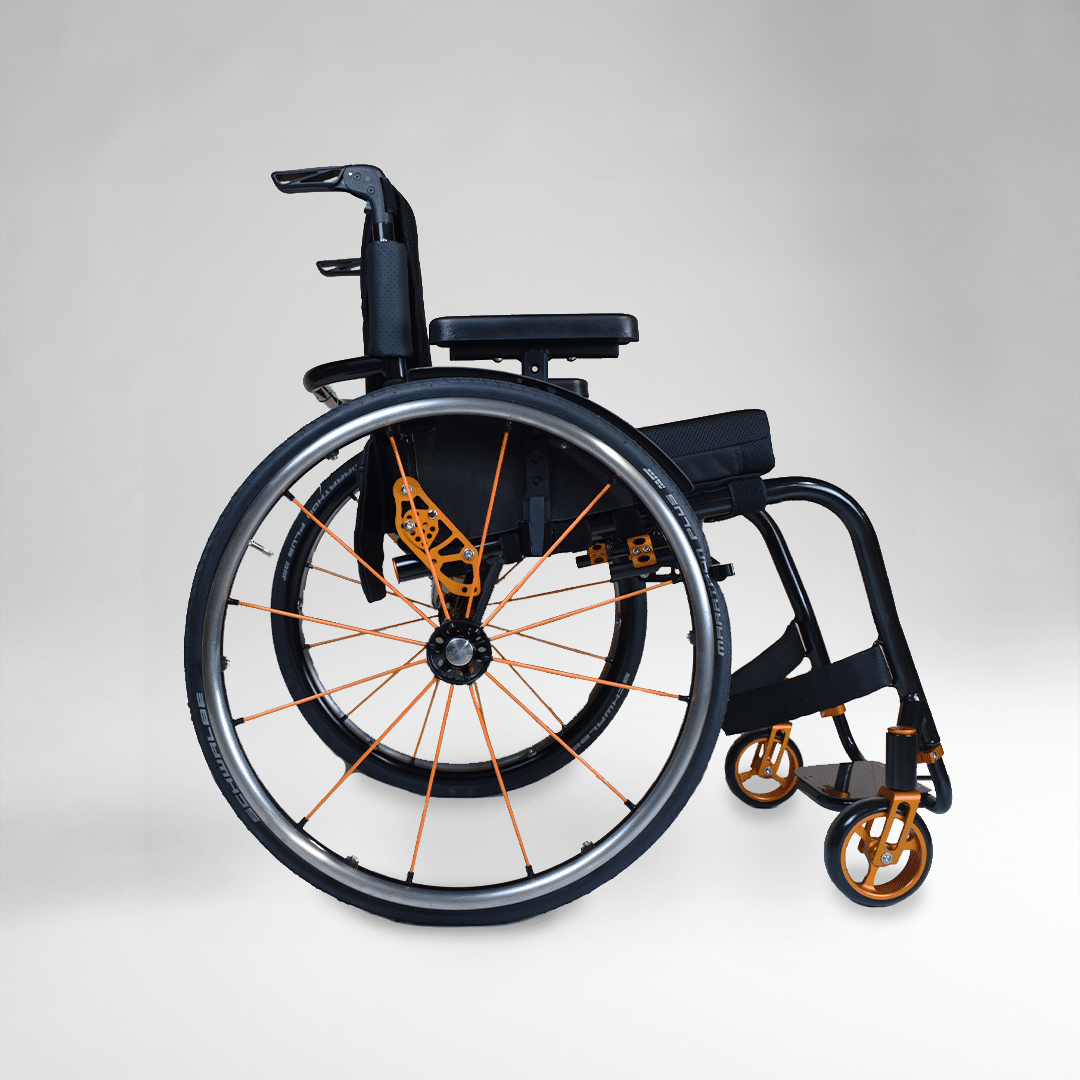
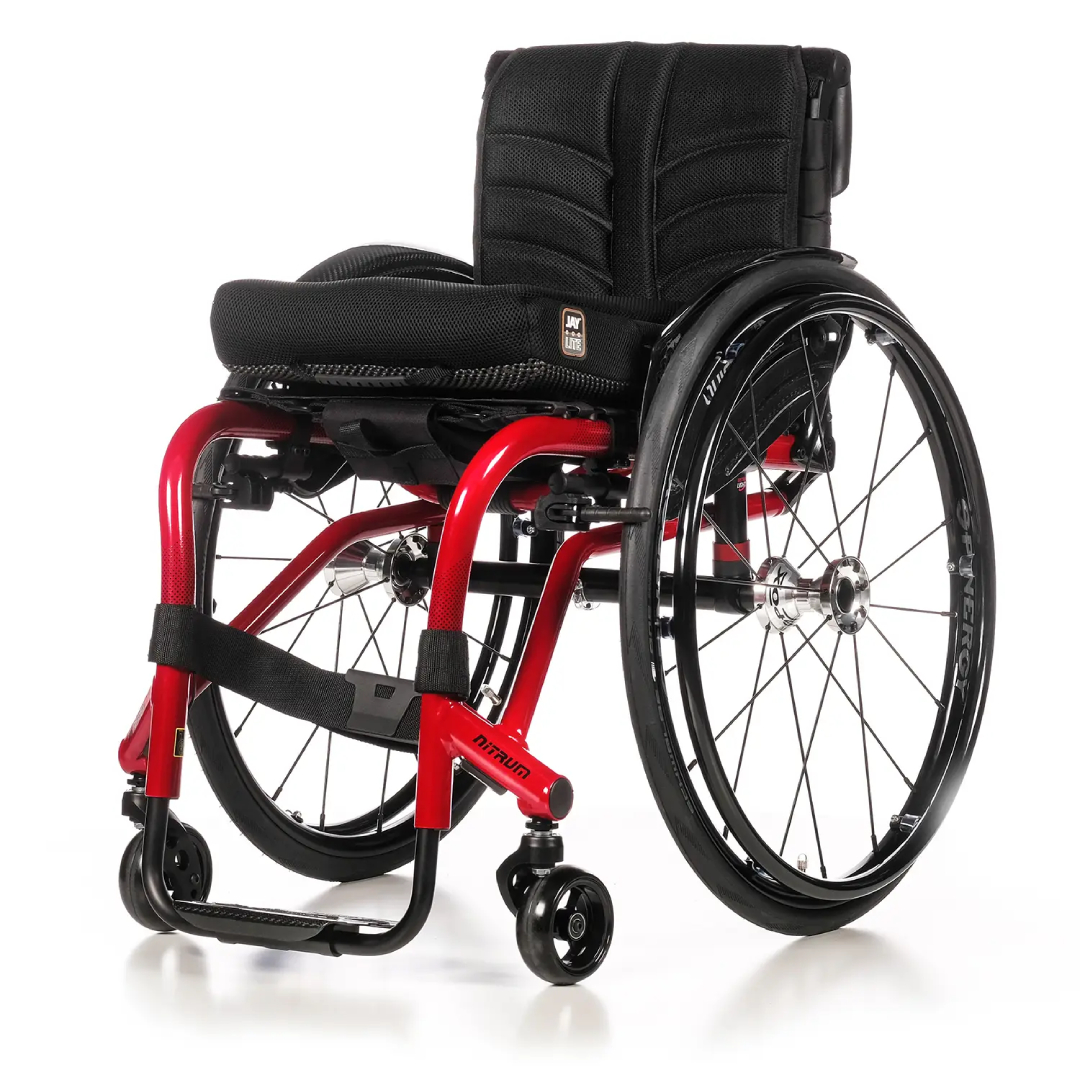
The Quickie Nitrum takes a different approach. It combines a lightweight 7020 oval aluminium frame with a wide range of adjustment possibilities.
Sunrise Medical lists seat widths from 12 to 20 inches and seat depths from 12 to 20 inches. The Nitrum also offers several frame angles, camber choices and centre-of-gravity adjustment.
This makes the Nitrum particularly interesting for users who want to fine-tune their wheelchair after delivery. The centre of gravity can be adjusted between 0 and 4 inches, while frame angles of 75°, 80° and 85° are available.
The standard Nitrum specification listed by Sunrise Medical weighs 18.3 lb, or approximately 8.3 kg, while the transport weight is 10.8 lb, approximately 4.9 kg. Its listed user weight capacity is 275 lb, approximately 125 kg.
Why choose the Quickie Nitrum?
The Nitrum is a strong choice for users who want adjustability without moving away from a rigid active wheelchair.
For example, changes to centre of gravity can influence how the chair feels during propulsion and transfers.
Meanwhile, different frame angles and camber options allow the setup to be tailored more closely to individual requirements.
Its crash-tested specification is another consideration for users who require a wheelchair approved for vehicle transportation.
GTM Endeavour vs Quickie Nitrum: Which Is Lighter?
Weight is one of the most important factors when choosing an active wheelchair. However, published weights should always be compared carefully.
The GTM Endeavour is marketed as a lightweight wheelchair, with a UK supplier listing a transport weight of approximately 5 kg. Another specification database lists a complete chair weight of 5.6 kg including wheels and leg supports.
The Quickie Nitrum has a published standard weight of 8.3 kg in Sunrise Medical’s current US specification, with a 4.9 kg transport weight. Other Nitrum configurations and regional specifications can have different published weights.
Therefore, comparing the exact build is more useful than comparing a headline weight. Wheels, brakes, footrests, backrest and seating components can all change the final lifting weight.
Performance and Propulsion
Both wheelchairs are designed for active users, so propulsion efficiency is central to the comparison.
The GTM Endeavour’s rigid fixed-frame construction can provide a direct connection between the user and the drive wheels. This is particularly useful for experienced users who know their preferred balance and seating position.
The Nitrum adds more adjustment options. Its centre-of-gravity adjustment allows the wheelchair’s handling characteristics to be changed without replacing the complete frame. This can be valuable when the user’s requirements change over time.
In practice, neither wheelchair should be selected from specifications alone. A correctly fitted wheelchair can perform better for an individual than a theoretically lighter model with an unsuitable setup.
Adjustability: GTM Endeavour vs Quickie Nitrum
Adjustability is one of the biggest differences between these wheelchairs.
The GTM Endeavour focuses on a made-to-measure approach. This means the important dimensions are selected around the user rather than relying on extensive post-delivery adjustment.
The Nitrum provides more built-in adjustment. It offers different frame angles, camber settings, seat heights and centre-of-gravity adjustment.
As a result, the Nitrum may appeal more to users who want flexibility. Conversely, the Endeavour can be attractive to experienced users who already know their ideal measurements and want a straightforward rigid frame.
Which Wheelchair Is Better for You?
There is no universal winner between the GTM Endeavour and Quickie Nitrum.
Choose the GTM Endeavour if:
You want a highly personalised, made-to-measure wheelchair.
You prefer a fixed rigid-frame design.
You already understand your ideal seating position.
Low lifting weight is a major priority.
You value simplicity and a clean frame design.
Choose the Quickie Nitrum if:
You want extensive adjustment options.
You need centre-of-gravity adjustment.
You want several frame-angle and camber choices.
Your seating requirements may change.
A higher published user weight capacity is important.
What About TiLite-Style Rigid Wheelchair Performance?
Users comparing premium active wheelchairs may also come across TiLite models when researching rigid-frame options.
The important point is that GTM Endeavour and Quickie Nitrum are not TiLite wheelchairs. Instead, TiLite provides another benchmark for users looking at lightweight rigid-frame performance and extensive configuration choices.
If your priority is a highly personalised rigid wheelchair, it is worth comparing frame geometry, seat position, centre of gravity, wheel camber and overall lifting weight rather than focusing only on the brand name.
This approach is particularly useful when comparing the GTM Endeavour with premium rigid alternatives. A wheelchair should match the user’s body and propulsion style first, while brand and appearance should come afterwards.
GTM Endeavour vs Quickie Nitrum: Final Verdict
The GTM Endeavour is particularly appealing when a user wants a lightweight, made-to-measure rigid wheelchair with a simple fixed-frame philosophy.
The Quickie Nitrum is more attractive when adjustment flexibility is the priority. Its adjustable centre of gravity, frame angles, camber and seating dimensions give users more opportunities to fine-tune the chair.
For an experienced active wheelchair user who already knows their measurements, the GTM Endeavour can be a compelling option. However, users who want greater scope for future adjustments may prefer the Nitrum.
Ultimately, the best choice is the wheelchair that gives you the most efficient, comfortable and controlled propulsion in your everyday environment.
Frequently Asked Questions
Is the GTM Endeavour lighter than the Quickie Nitrum?
The exact answer depends on configuration. GTM lists the Endeavour as a lightweight made-to-measure chair, while Quickie publishes different Nitrum weights depending on specification. Therefore, compare complete chair weight and transport weight using identical components.
Is the GTM Endeavour a rigid wheelchair?
Yes. The Endeavour is a rigid-frame active wheelchair. GTM describes its standard design as a fixed frame, with the camber bar welded rather than adjustable.
Is the Quickie Nitrum adjustable?
Yes. The Nitrum offers several adjustment possibilities, including centre-of-gravity adjustment, frame angles, camber and seat-height options.
Which wheelchair is better for an experienced active user?
Both can suit experienced active users. The GTM Endeavour may appeal to someone who wants a highly personalised fixed setup. The Nitrum may suit someone who wants more adjustment after the initial prescription.
What is the weight limit of the Quickie Nitrum?
Sunrise Medical currently lists the standard Nitrum with a maximum user weight of 275 lb, approximately 125 kg. The Nitrum Hybrid is listed at 300 lb, approximately 136 kg.
Is the Quickie Nitrum crash tested?
Yes. Sunrise Medical states that the Nitrum conforms to ANSI/RESNA WC-19 standards for transit in its listed specification. Regional specifications should always be checked before vehicle transportation.
Should I choose a fixed or adjustable rigid wheelchair?
A fixed wheelchair can be ideal when your measurements and preferred setup are well established. An adjustable wheelchair can provide more flexibility when your requirements may change. A professional assessment is recommended before ordering either type.
Can I compare these wheelchairs with TiLite models?
Yes. TiLite rigid wheelchairs are another useful benchmark when researching premium active wheelchairs. Compare frame geometry, weight, adjustability, seating position and propulsion efficiency rather than choosing solely on brand.